| 4. |
Check cylinder compression pressure.
| (1) |
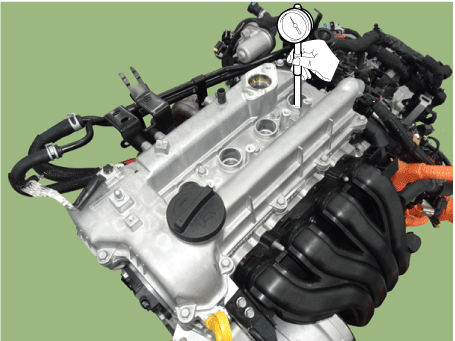
Insert a compression gauge into the spark plug hole. If possible,
place the gauge where it can be seen from inside the vehicle.
|
| (2) |
Attach the KDS/GDS
| –
|
Connect the cable of KDS/GDS to the data link connector.
|
| –
|
Select the vehicle model and then the HCU system.
|
| –
|
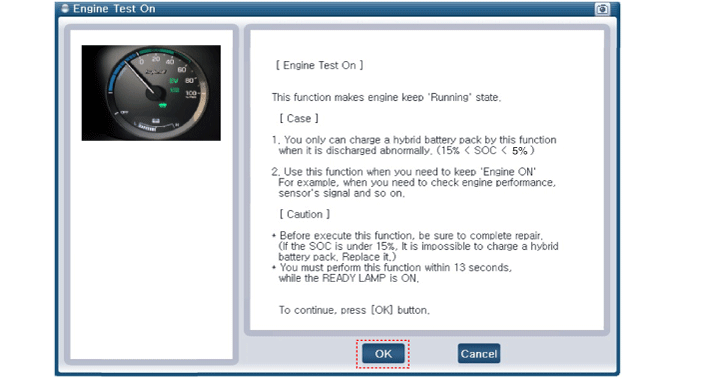
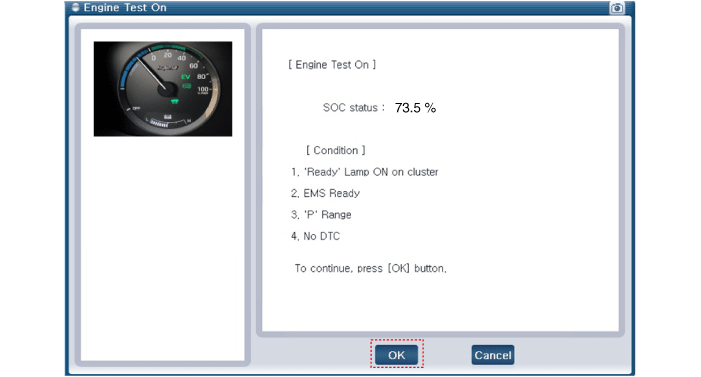
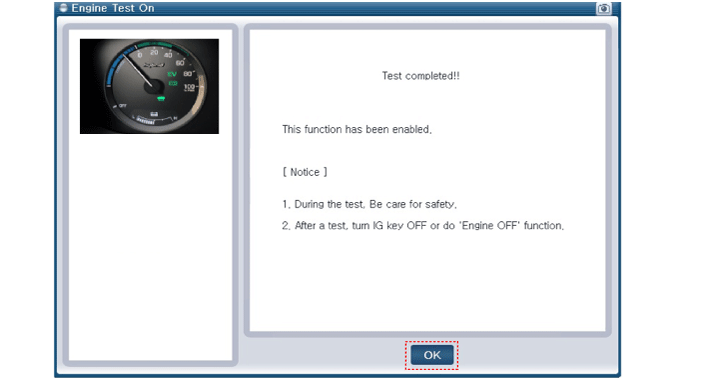
Select the "Engine On Test". See the screens below.
|
|
| (3) |
While cranking the engine, measure the compression pressure.
| –
|
With the Brake pedal depressed, press the Start/Stop
Button (SSB) one time.
|
| –
|
If the engine cranks, let it crank about 8 to 10 cycles
(until the gauge readings stabilizes) then press the SSB
one time to stop the engine from cranking.
|
| –
|
If the engine does not crank on its own when the SSB
is pressed, the KDS/GDS should be used to crank the engine.
While in the “Engine On Test” follow the instruction on
the screen.
|
| –
|
The “Engine On Test” will start the engine cranking.
After the compression readings stabilize (8-10 cycles),
press the SSB one time to stop the cranking.
|
|
| (4) |
Repeat steps (1) through (3) for each cylinder.
|
Be sure ignition is in the OFF mode between each cylinder
test.
This measurement must be done while the engine is still
near operating temperature.
|
|
Compression pressure :
981kPa (10.0kgf/cm², 142psi) / 300 - 350rpm
Minimum pressure :
834kPa (8.5kgf/cm², 121psi) / 300 - 350rpm
Difference between each cylinder :
100kPa (1.0kgf/cm², 15psi) or less
|
|
| (5) |
If the cylinder compression in 1 or more cylinders is low, pour
a small amount of engine oil into the cylinder through the spark
plug hole and repeat steps (1) through (3) for cylinders with low
compression.
| •
|
If adding oil helps the compression, it is likely that
the piston rings and/or cylinder bore are worn or damaged.
|
| •
|
If pressure stays low, a valve may be sticking or seating
is improper, or there may be leakage past the gasket.
|
|
|


 Specifications
 Troubleshooting