
Kia Niro: Rear Suspension System / Rear Coil Spring Repair procedures
| Removal |
| 1. |
Disconnect the battery negative cable. |
| 2. |
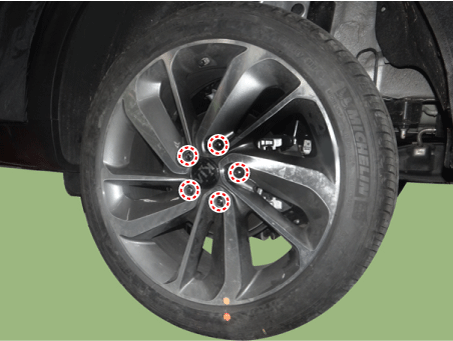
Remove the wheel and tire.
|

| 3. |
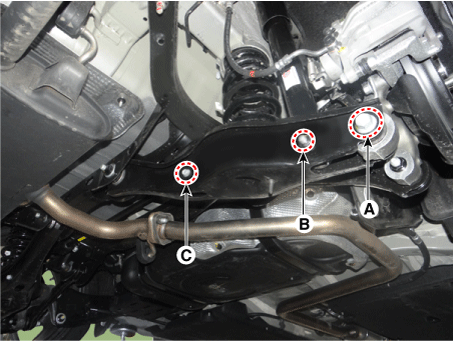
Loosen the rear lower arm bolt (A), rear shock absorber bolt (B) and stabilizer link bolt (C) and then remove the rear coil spring.
|
| 4. |
Install in the reverse order of removal. |
| 5. |
Check the wheel alignment. (Refer to Suspension System - "Alignment") |
 Trailing Arm Repair procedures
Removal
1.
Disconnect the battery negative cable.
2.
Remove the wheel and tire.
Tightening torque:
107.9 - 127.5 N·m ( ...
 Rear Cross Member Repair procedures
Removal
1.
Disconnect the battery negative cable.
2.
Remove the wheel and tire.
Tightening torque:
107.9 - 127.5 N·m ( ...
Other information:
Kia Niro 2017 (DE HEV) Service Manual: High voltage shut-off procedures
High Voltage Shut-off Procedures
•
Be sure to read and follow the “General Safety Information and
Caution” before doing any work related with the high voltage system.
Failure t ...
Kia Niro (DE HEV) Owners Manual: Opening the tailgate
The tailgate is locked or unlocked when all doors are locked or unlocked
with the key, transmitter, smart key or central door lock/unlock switch.
Only the tailgate is unlocked if the tailgate unlock button on the transmitter
or smart key is pressed for approximately 1 second.
If unloc ...
